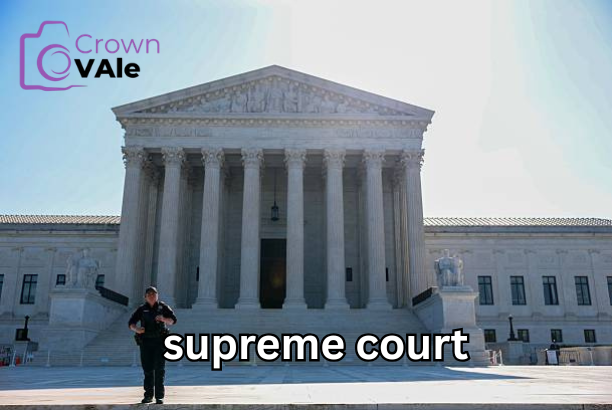

The Supreme Court of the United States is the highest judicial authority in America. Its primary role is interpreting the Constitution and deciding whether laws or government actions are constitutional.
The court consists of nine supreme court justices:
- One Chief Justice
- Eight Associate Justices
These justices are nominated by the president and confirmed by the Senate. Once appointed, they typically serve for life unless they retire, resign, or are removed through impeachment.
The court hears cases involving:
- Constitutional rights
- Federal laws
- State disputes
- Presidential authority
- Election issues
- Immigration policies
- Business regulations
Unlike Congress, the Supreme Court does not create laws directly. Instead, it interprets how laws should apply under the Constitution.
Why Supreme Court News Matters More Than Ever
Many people once viewed the Supreme Court as distant from everyday life. That has changed dramatically.
Modern Supreme Court news affects:
- Healthcare access
- Student loans
- Immigration policy
- Gun regulations
- Voting systems
- Social media laws
- Presidential powers
- Economic rules
One important shift is how quickly court rulings now influence national culture. In the past, major decisions unfolded slowly through newspapers and legal journals. Today, social media transforms rulings into instant political debates within minutes.
This creates both awareness and confusion. People often react emotionally before fully understanding what the court actually decided.
Supreme Court Makes Major Announcement: Why Headlines Explode
Whenever headlines claim the supreme court makes major announcement, public interest surges immediately.
These announcements may involve:
- Emergency rulings
- Election-related decisions
- Constitutional disputes
- Presidential powers
- High-profile criminal cases
What many readers do not realize is that the Supreme Court often releases decisions without dramatic public appearances. Most rulings arrive through written opinions that legal experts then interpret.
A unique insight rarely discussed is how media framing shapes public reaction. Two news outlets can describe the exact same ruling in completely different emotional tones, influencing how millions perceive the decision before reading any legal facts themselves.
The Growing Focus on Supreme Court Justices
Public attention toward supreme court justices has increased sharply over the last decade.
Americans now follow justices almost like political figures. Their speeches, backgrounds, judicial philosophies, and even personal lives receive intense media coverage.
Current debates often focus on:
- Conservative vs. liberal interpretations
- Originalism and constitutional meaning
- Ethics concerns
- Judicial independence
- Political influence
One major change in recent years is that many voters now consider Supreme Court appointments when choosing presidential candidates. That was far less common decades ago.
The reason is simple: justices can shape national policy for generations.
Trump Supreme Court Influence
The phrase trump supreme court appears frequently because former President Donald Trump appointed multiple justices during his presidency.
Those appointments significantly shifted the ideological balance of the court.
Supporters argue the appointments strengthened constitutional originalism and judicial restraint. Critics believe the changes pushed the court toward more politically conservative rulings.
Regardless of political opinion, Trump’s impact on the court is historically significant because:
- Multiple appointments happened during one presidency
- Several decisions reshaped major federal policies
- The court’s long-term direction changed
One overlooked insight is that Supreme Court influence often outlasts presidential popularity. Even after administrations end, judicial appointments continue shaping law for decades.
Supreme Court Birthright Citizenship Decision Debate
One of the most sensitive modern legal discussions involves the supreme court birthright citizenship decision debate.
Birthright citizenship refers to the constitutional principle that people born in the United States are generally recognized as citizens.
Debates surrounding this issue often focus on:
- Immigration policy
- Constitutional interpretation
- National identity
- Federal authority
Many online discussions oversimplify the issue. In reality, constitutional citizenship questions involve centuries of legal precedent and complex historical interpretation.
Legal experts often caution readers against assuming viral headlines represent final constitutional changes. Court cases frequently take years to move through the legal system.
Supreme Court Tariffs and Economic Power
The phrase supreme court tariffs has become more common because economic policy increasingly intersects with constitutional law.
Tariff disputes can involve questions about:
- Presidential authority
- International trade
- Congressional power
- Emergency economic actions
For many Americans, tariff rulings may seem abstract. However, they can affect:
- Consumer prices
- Manufacturing jobs
- Import costs
- Global trade relationships
A lesser-known insight is that economic rulings often receive less emotional attention than cultural cases, even though they may directly affect household finances more significantly over time.
Wisconsin Supreme Court Race Polls and Political Tension
Interest in wisconsin supreme court race polls highlights how state-level courts are becoming national political battlegrounds.
In recent years, state Supreme Court races have drawn:
- Massive campaign funding
- National media attention
- Political endorsements
- Record voter turnout
Why? Because state courts can decide issues involving:
- Voting maps
- Election disputes
- Abortion laws
- Labor policies
- State constitutional questions
One important trend is that judicial races now resemble political campaigns more than traditional legal appointments. That transformation worries some legal scholars who fear public trust in judicial neutrality could weaken.
How Supreme Court Decisions Affect Everyday People
Many readers assume Supreme Court cases only affect lawyers or politicians. In reality, court rulings often influence ordinary daily life.
Examples include:
Education
Court rulings may shape student rights, affirmative action, and school funding debates.
Employment
Labor regulations and workplace discrimination laws can change through court interpretation.
Healthcare
Insurance access and federal healthcare authority often reach the court.
Technology
Social media moderation and digital privacy questions increasingly involve constitutional review.
Elections
Voting access and district boundaries frequently depend on judicial interpretation.
Common Misunderstandings About the Supreme Court
“The Court Can Create Any Law It Wants”
The court interprets laws rather than writing legislation directly.
“Justices Always Vote Politically”
While ideology matters, many rulings involve legal reasoning that does not fit simple political categories.
“Every Case Is Decided Quickly”
Major constitutional disputes often take years before reaching final resolution.
“Supreme Court Decisions Never Change”
Historical rulings can later be revised or overturned under new legal interpretations.
Why Public Trust in the Court Is Changing
Trust in the Supreme Court has become increasingly divided along political lines.
Several factors contribute to this:
- Polarized media coverage
- High-profile rulings
- Partisan political debates
- Confirmation battles
- Social media misinformation
One unique insight rarely explored is that visibility itself changes institutions. The more constantly Americans hear about the court, the more people begin viewing it through political identity rather than legal structure.
That shift may become one of the most important long-term consequences of modern Supreme Court culture.
The Future of the Supreme Court
The court’s influence will likely continue expanding in coming years.
Future battles may involve:
- Artificial intelligence regulation
- Online speech rights
- Election integrity disputes
- Immigration enforcement
- Executive power
- Climate regulations
Because Congress often struggles to pass major legislation, courts increasingly become the final arena for national disputes.
That reality places enormous pressure on the Supreme Court to maintain credibility and public trust.
FAQ
What does the Supreme Court of the United States do?
The Supreme Court of the United States interprets the Constitution and reviews major legal disputes. It decides whether laws and government actions are constitutional. Its rulings affect federal policy, civil rights, elections, and many everyday legal protections.
Why is supreme court news always trending?
Supreme court news trends because court decisions now affect highly emotional political and cultural issues. Topics like immigration, voting rights, healthcare, and presidential power create strong public reactions. Social media also spreads court-related discussions rapidly.
How many supreme court justices are there?
There are nine supreme court justices. The court includes one Chief Justice and eight Associate Justices. They are nominated by the president and confirmed by the Senate.
Why are Trump Supreme Court appointments important?
Trump Supreme Court appointments shifted the ideological balance of the court for many years into the future. Those appointments continue influencing major constitutional rulings. Many analysts consider them one of the most lasting impacts of his presidency.
What is the supreme court birthright citizenship decision debate about?
The debate focuses on constitutional interpretations of citizenship rights for people born in the United States. Legal discussions involve immigration policy and the meaning of the Fourteenth Amendment. The issue remains politically and legally controversial.
Why are Wisconsin Supreme Court race polls getting national attention?
Wisconsin Supreme Court race polls matter because state courts increasingly influence major national issues like voting maps and election laws. Political groups now invest heavily in state judicial elections. These races can shape future national political outcomes.
Conclusion
The Supreme Court is no longer viewed as a quiet institution operating in the background of American politics. Today, it stands at the center of national debates involving elections, immigration, economics, constitutional rights, and presidential authority.
As public attention grows, so does the importance of understanding what the court actually does rather than relying only on viral headlines or political commentary. The court’s influence extends far beyond Washington, affecting ordinary families, businesses, schools, and communities across the country.
Whether people agree or disagree with individual rulings, one thing is clear: the Supreme Court of the United States will continue shaping America’s legal and political future for generations to come.