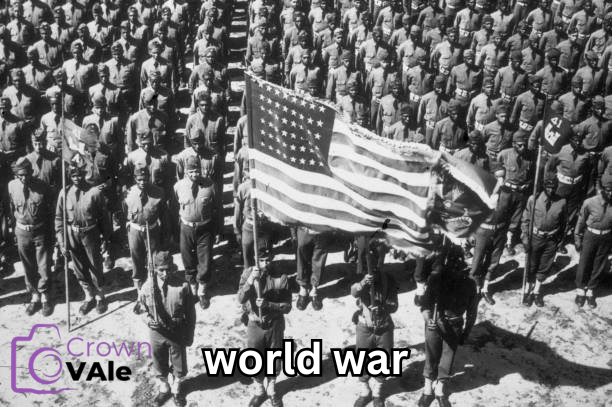
The concept of World War 3 is not a defined historical event. Instead, it is a theoretical global conflict that people use to describe a large-scale war involving multiple major powers.
To understand it, we must first look at history:
- World War I involved major European powers and alliances that expanded globally
- World War II involved nearly every major world power and reshaped global politics
- The term “first world war” and “second world war” reflect how these conflicts escalated beyond regional disputes
A key insight often missed is that both world wars did not begin as “global wars.” They started as regional or political tensions that expanded due to alliances, economic pressure, and escalation cycles.
This is why modern analysts focus less on naming countries and more on understanding systems of escalation.
What Could Cause a Modern Global Conflict?
Instead of asking “what countries will be in World War 3,” experts usually analyze conditions that could increase global tensions.
Potential contributing factors include:
- Military alliances and counter-alliances
- Trade wars and economic fragmentation
- Cyber warfare and digital infrastructure attacks
- Competition over energy, water, and rare resources
- Regional conflicts involving global powers indirectly
- Miscommunication during high-tension incidents
A unique modern insight is that future global conflict may not look like traditional warfare. Instead, it could involve multiple layers happening simultaneously:
- cyber attacks on infrastructure
- economic sanctions and trade disruption
- drone and AI-assisted warfare
- proxy conflicts in multiple regions
This would make it fundamentally different from both World War I and World War II.
What Countries Might Be Involved in a Global Conflict?
It is important to be careful here: no credible source can accurately predict “which countries will be in World War 3.”
However, in geopolitical analysis, researchers usually look at:
- major military powers
- nuclear-capable states
- alliance systems
- regional flashpoints
Possible involvement would depend on alliances and escalation patterns, not predetermined participation.
For example:
- NATO member countries are linked through collective defense agreements
- Major global economies are interconnected through trade dependencies
- Regional conflicts may draw indirect support from larger powers
A key insight often ignored in online discussions is that modern global economies are deeply interdependent. Unlike the early 1900s, where economies were more isolated, today’s world makes full-scale conflict extremely costly for all sides.
Lessons From World War I and World War II
History provides the most important framework for understanding global conflict risk.
1. Escalation happens gradually
World War I began with political tension and alliances that pulled nations into war step by step.
2. Economic instability increases risk
Before World War II, global economic depression contributed to political extremism and instability.
3. Alliances can expand conflicts
Both wars show how regional conflicts became global due to alliance obligations.
4. Technology changes warfare
Each world war introduced new military technologies that increased destruction and speed of conflict.
A rarely discussed insight is that modern nuclear deterrence fundamentally changes the “rules” of global war. Unlike earlier wars, full-scale direct conflict between major powers carries extreme mutual risk, which acts as a stabilizing factor.
Modern Factors That Reduce the Chance of World War 3
Despite global tensions, several systems today reduce the likelihood of a traditional world war:
- Nuclear deterrence between major powers
- International trade dependencies
- Diplomatic organizations and treaties
- Global financial integration
- Instant communication reducing misinterpretation delays
These systems do not eliminate conflict—but they change how conflict unfolds.
Instead of full-scale wars like the “first world war” or “second world war,” modern conflicts are more likely to appear as:
- regional wars
- economic competition
- cyber conflicts
- proxy engagements
The Role of Technology in Modern Conflict
Technology is one of the biggest differences between past wars and any theoretical future global conflict.
Key developments include:
- Artificial intelligence in defense systems
- Cyber warfare targeting infrastructure
- Satellite surveillance and intelligence
- Autonomous drones and robotic systems
- Information warfare and digital propaganda
A unique insight is that misinformation itself has become a strategic tool. Unlike previous centuries, public perception can now be influenced in real time, shaping political decisions faster than traditional diplomacy.
How Pop Culture Shapes World War 3 Fear
Search interest in World War 3 is often influenced by movies, games, and books rather than actual geopolitical forecasts.
For example:
- World War Z portrays global collapse scenarios involving pandemics and societal breakdown
- War simulation games often simplify complex geopolitics into direct conflict narratives
- Social media amplifies worst-case scenarios quickly
This creates a gap between perception and reality, where fear spreads faster than factual analysis.
Common Mistakes in Understanding World War 3
1. Assuming prediction is possible
No model can accurately predict a global war with certainty.
2. Confusing tension with inevitability
Geopolitical tension does not automatically lead to war.
3. Ignoring economic interdependence
Modern economies are deeply connected, making large-scale war extremely costly.
4. Over-relying on social media narratives
Online content often prioritizes engagement over accuracy.
FAQ
What is World War 3?
World War 3 is a hypothetical concept describing a potential large-scale global conflict involving multiple major world powers, but it has never occurred.
Could another world war happen like World War I or World War II?
While global conflict is theoretically possible, modern political, economic, and nuclear systems make traditional large-scale wars much less likely than in the past.
What countries will be in World War 3?
There is no reliable way to predict specific countries. Modern geopolitics depends on alliances, diplomacy, and evolving global conditions.
Why do people talk about World War 3 so much?
Media, social networks, and global tensions often increase public curiosity and speculation about large-scale conflict scenarios.
How is modern war different from World War I and World War II?
Modern warfare includes cyber attacks, economic pressure, and advanced technology, making it very different from traditional battlefield wars.
Is World War Z real?
World War Z is a fictional story and not related to real-world military events.
Conclusion
The idea of World War 3 is shaped more by history, media, and speculation than by any confirmed trajectory. Lessons from World War I and World War II show that global conflicts emerge from complex chains of political, economic, and social factors—not simple predictions.
Today’s world is more interconnected than ever, which changes both the risks and the safeguards against large-scale war. While tensions exist globally, modern systems of diplomacy, trade, and deterrence play a major role in preventing escalation.
Ultimately, understanding World War 3 is less about forecasting disaster and more about learning how global stability is maintained—and why history has not repeated itself in the same way since the mid-20th century.